Friday, July 11, 2014

GARDENING IN JULY

      The transition into summer brings with it a change in gardening chores for the month of July.  Gardening activities usually slow down as the temperature continues to climb into the 90’s.  July is often a very dry month, and like most years, can be very hot, too.  So, we usually don’t start a lot of new garden projects, but there is always maintenance chores to do.


      By mid-summer, many petunias and other annual flowers can get leggy, producing blossoms at the tips of long leafless stems.  One exception is the wave petunias that require little pruning unless you planted them too close together.

      For most annuals, frequent pruning will keep plants bushy.  For best results, prune back one long stem each week or so, cutting back to a set of leaves or a node.  The plant will respond by sending out more shoots from that point.  Another effective technique is to shear all the stems back by a third.  However you will sacrifice flowers for a few weeks with this method.

      This is also the time to prune back perennials:  salvia, catmint, tall sedum varieties, asters, garden phlox, and some other tall perennials.  They will still bloom although sometimes a little later in the season.

      Remove the suckers from grafted roses (which means most roses) and crabapples.  These are the quite vigorous shoots that arise from the base of the plant.

      In the vegetable garden, indeterminate tomato plants such as “Better Boy” , will produce many suckers.  A sucker is that new growth that comes in where a branch connects with the main trunk.  Removing suckers will decrease the number of fruits produced but will ensure that the remaining tomatoes will be larger and will ripen sooner.

      Continue making succession plantings of vegetables to ensure a harvest well into autumn.  If possible, plant cool-season crops, such as broccoli, where they will get a little shade from the hot afternoon sun.  Early in the month, plant another row of bush beans for late summer harvest.

      We all got behind in our weeding, but it is important to remove weeds before they set seed.  Some weeds will continue to develop their seeds even after you pull them, so remove them from the garden.

Home Grown Produce

      If you are not growing it, consider buying it from a local farmer’s market.  Produce is at the peak of nutritional value when it is ripe.  Produce that travels across states or even across countries cannot be picked ripe, because it would not be edible by the time it arrives in your supermarket.  Produce may gain color and soften as it travels to your store, but nutrition comes from the stems of a living plant, so the locally grown produce will have much higher nutritional value. Picked ripe, tomatoes can contain between 20-30% more of these vitamins and minerals than tomatoes picked before they ripen

July Gardening Tips

    Cutting flowers is best done with sharp shears or a knife which will help avoid injury to the growing plant.  A slanting cut will expose a larger absorbing surface to water and will prevent the base of the stem from resting on the bottom of the vase. 

     Tall flowers should be staked to prevent damage by wind.  Use stakes which are large enough to support the plant and use soft twine or twist ties to secure.

     A garden needs one inch of rain or water each week.  Early morning is the best time to water.  Evening watering is less desirable because plant leaves that remain wet through the night are more susceptible to fungus diseases.  Mulch plants to reduce water losses and improve yields.

•           Check the soil moisture of container-grown vegetable and flowers daily.  As the temperature rises, some plants may need water twice daily.


Tom McNutt is a professor emeritus at The Ohio State University and a retired TV garden expert.


Monday, June 2, 2014

POT-SCAPING


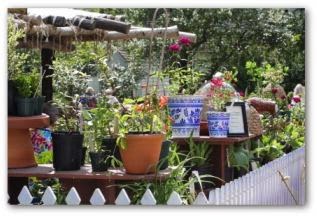
Pot-scaping simply takes containers of plants off their traditional pedestals, such as balconies, decks, windowsills, and moves them into a broad landscape.  It involves the artful grouping of container-grown plants.  These groupings become mine-gardens, adding a touch of color to bare patches in the landscape.

Container gardening is showing up in beds and borders or standing alone.  Busy homeowners find decorating their yards with “spots of pots” an easy way to splash color through the yard.     
 
The possibilities for container gardening are endless.  Anything that grows in the garden will grow in containers: annuals, perennials, dwarf trees, shrubs or vegetables.  Tropical plants in containers are becoming very popular here.  Many homeowners are decorating their decks, patios and landscapes with tropical container plants that have bold textured leaves, like banana trees, citrus trees and elephant ears.  Some exotic varieties, unless brought indoors during winter, won’t survive Ohio’s winter weather.   (In the past few years, some hardy tropical plants that can be used in this area, have come on the market.  Be sure to check the care tag for zones.)  If you do try to over-winter the non-hardy type, place plant in a large south-facing window.  Then move it outdoors in the summer.  You will not corner the market on fruit production, but it will form fruit.  Some people treat the tropical plants as annuals, replacing them every year.

Containers come in a variety of sizes, shapes and materials.  What you choose will depend on the type of plant and the location.  Beware of decorative planters that lack drainage holes.  This creates water-logged soil and rotting roots.  Research shows that the old practice of placing a layer of gravel in the bottom of the container, to give some room for water to accumulate with out saturating the soil, doesn’t really work.  If you want to use a decorative planter that doesn’t have a drain hole, put your plants in a regular flowerpot and place it inside the decorative container.

The new lightweight containers made from polished styrene and foam core, are making container gardens more versatile.  You can move pots around more easily, to change the dynamic of your outdoor space.   
   
It seems gardeners are putting high priority on plants with long term, all season color.  The experts tell us the big colors  are red, gold and purple.  If you like these colors, then go with the trend.  If you want something else, remember landscaping is 98% personal preference and your point of view is the most important view.

  TOM’S TIMELY  TIPS FOR JUNE
  Move houseplants to shaded areas outside 
for the summer. Be aware that plants will need more water 
during hot and windy weather.

Heavy rains encourage slug problems. Check for slugs during rainy periods and hand pick the pests.

For hanging baskets in cool, shady locations, use tuberous begonias, ferns, impatiens or fibrous 
rooted begonias in combination with trailing plants, such as English Ivy.

Remove old flower heads from annual bedding plants to keep them blooming.

Remove foliage from spring bulbs after it turns yellow and begins to dry.  Set out bedding plants to 
cover the bare spots using care not to damage the bulbs.

Use bark mulch around young trees to protect them from lawn mower damage.

Spring flowering shrubs such as spirea, viburnum, lilac and forsythia should be pruned as soon as they are done blooming.

Tom McNutt is a professor emeritus at The Ohio State University and a retired TV garden expert.

.

Saturday, May 3, 2014

WHAT HAPPENED TO SPRING


The title of my April blog was, “Spring Has Sprung”.  The warm spell in March caused plants to develop earlier than usual which set them up for a cold whammy.  So what happened to spring and will landscape plants recover?

Some people blame global warming, others think we are going back to the ice age.  Maybe the answer is, we live in Ohio, so relax and wait an hour or a day and it will probably change.

Cold weather can cause all types of problems for plants.  Freezing temperatures can damage plants by rupturing plant cells as ice crystals form and rapid changes in temperatures occur.  Evergreen plants can suffer damage but they are the least damaged by freezing spring weather.

The signs of cold damage can be confusing, since some damage may not be evident until months later.  Leave and tender shoots subjected to freezing temperatures or chilling damage appear water-soaked and wilted.  These tissues will usually turn black within a few hours or days.  The tips of narrow-leaved evergreens, such as junipers, may turn uniformly brown.

The leading question in my mailbag is, “Will my plants recover?”  People are asking about sad looking bleeding hearts, late and patchy flowers or shrubs and trees (leaves that have dried out or have holes), hostas, ferns and other perennials.

Do not be in a hurry to prune or remove your damaged plants.  Some plants may appear dead, but they are not.  Corrective pruning should not be started until the full extent of the damage can be determined.

The extend of plant damage is dependent on several factors.  These factors include temperature, plant species, exposure, and stage of plant growth.

Symptoms:
Symptoms of freezing damage include shriveling and browning or blackening of damaged tissue,  Damaged growth often becomes limp.  Eventually, damaged or destroyed leaved may drop from the tree or shrub.

Once you have determined the extend of damage, remove any dead wood.  There is very little that can be done to revive plants suffering from the extreme effects of freezing.  Watering cold-damaged plants that appear wilted will not help to revive them.

Prognosis:
Fortunately, trees and shrubs have the ability to leaf out again if the initial growth is damaged or destroyed.  Healthy, well established trees and shrubs should not be greatly impacted and will produce additional growth.  Trees and shrubs planted within the past three to five years may benefit from a light application of fertilizer and periodic watering during dry weather.

The prognosis for freeze-damaged perennials is also good.  While the freezing temperatures damaged the perennial’s foliage, their crowns and roots were not harmed.  Damaged perennials will send up new growth.

Once you start seeing new growth, simply remove the dead stuff.  You may wish to shape your shrubs a bit when you do this, and some soft-wooded shrubby perennials might look best cut back fairly close to the ground.  Look on the bright side – you probably needed to cut some of your plants back anyway, and with a bit of fertilizer your garden should be looking pretty good again in a month or so.

Don’t get caught up in the catch-up “frenzy”.  Remember that impatiens, million bells, petunias and tomatoes should not be planted until after the last chance of frost.

TOM’S TIPS FOR MAY GARDENING

Mow lawns regularly to keep grass at 2 ½ inch height.

Aerate and moisten compost pile to speed decomposition. 

  Deadhead bulbs but allow foliage to remain until yellow to nourish bulbs for next year’s display.

As night temperatures moderate into the 60’s, move houseplants outdoors (avoid full sun and windy locations.)

Plant vegetables in different locations than last year.  This will keep your garden healthier.

Fertilize lawns in May (leaving grass clippings on the lawn can reduce the need to fertilize.)

Continue to prune all plant material to remove any diseased, dead, weak or crossing branches.

   Prune early spring flowering shrubs after blooming.

Tom McNutt is a professor emeritus at The Ohio State University and a retired TV garden expert.




Monday, April 7, 2014

SPRING HAS SPRUNG


Spring has officially sprung and now it is time to get all your gardening chores done that you did not complete last fall.  If April is considered a cruel month, it’s either because there is so much to do all at once or because the weather won’t cooperate and let you do it.

Most of us are anxious for things to green up.  We daily check our lawns to see if they look any greener than the day before.  We watch the tree buds to see if they are about to open.  We do the same for shrubs and trees, just waiting until they decide to bloom.  It’s been a long winter and we are ready for spring.

As a result, sometimes we hurry things.  Lawns are just coming out of their winter dormant stage and this is the time when root growth is important to plant.  So what do we do?  We rush out and apply lots of fertilizer telling the plant to green up those leaves right now.  When we apply large amounts of nitrogen fertilizer early, grass spends more effort turning green and growing grass than developing roots.
Generally we recommend fertilizing lawns in late April or early May.  But I must admit, it is hard to accept that everyone else’s lawn is green except yours.  So many of us will jump the gun and fertilize early in April instead of waiting.  And many of us use lawn care companies who need to start fairly early so they get all their customers done on time.  So, it is easy for us all to get started earlier than we need to.

The same thing happens with applying crabgrass killers.  We sometimes put it on too early, and then about August the chemical protection runs out and we still end up with crabgrass in our lawns.
 
Crabgrass germinates when the soil temperatures warm up to 60° F or so.  A few rules of thumb that will help you know when to apply crabgrass herbicides are:
When the soil temperatures are about 50° for three consecutive days;
When  forsythia is in full bloom;
Or, no later than April 20.

Over the past several years we have noticed an increased interest in people growing their own fresh, healthy vegetables.  April is the time to plant peas, onions, parsnips, spinach and other cool weather crops.

When planning your garden, consider using raised beds, which can dry out wet soils and in general, make the soil looser for easier root penetration.  Rotating crops helps vegetable take advantage of the different nutrients available in the soil to plants.  For example, beans and peas fix nitrogen in the soil, they should be followed by crops such as corn, which is a heavy nitrogen user.  Vegetables like tomatoes and potatoes should not be planted in succession due to their susceptibility to similar diseases.

Another option is to grow your plants in containers.  There are many plants suitable for container gardening.  Perennial plants, including trees, shrubs, ornamental grasses, and bulbs are possibilities if you consider how you will over-winter the containers.  Selects of annual flowers is nearly unlimited, and there are many vegetables that are suitable for container culture.

Of course, these plants still require sunlight, water, good drainage, nutrients and ideal temperatures to produce well.  Remember, if it will grow in the ground, it will grow in the container.

TOM’S TIPS FOR APRIL GARDENING

Service the lawnmower and sharpen the blade.

Cut back ornamental grasses.

Place a birdhouse in the garden to attract insect-eating friends.

Keep that Easter Lily in a bright cool location but out of direct sunlight.  Water as soil begins to dry.

Plant a tree in celebration of Arbor Day, April 25.

Spring into action.  DON’T GET SPRUNG.


Tom McNutt is a professor emeritus at The Ohio State University and a retired TV garden expert.

.